Notes from the atelier
The Tee de Ville: why a leather house designed a t-shirt

There is an hour, in Dakar, when a shirt becomes a mistake. Too hot for the street, too formal for the terrace, and yet one does not want to give up on being dressed. The Tee de Ville was born in that hour: a garment worn on its own or under a jacket, that does not ask you to choose between elegance and air.
The collar
Everything starts with the collar. A short standing collar — a mock neck — doubled in the same smooth fabric as the body, with no visible rib, no decorative topstitching. It stands straight, it clears the neck, and under a jacket it draws a clean line where a crew neck slumps. It is the detail that turns a t-shirt into an outfit.
The fabric
We set aside the heavy jersey of streetwear. It holds its shape, but it holds heat too. The Tee de Ville is cut from a compact long-staple combed cotton jersey, smooth and matte — dense enough not to cling, light enough for a thirty-degree day. A small proportion of elastane, so the collar recovers its shape after every wash.
The cut
Straight, semi-fitted. Neither tight nor oversized. A clean chest, real ease through the torso and waist, sleeves that stop where the arm is slimmest. And grading designed from the pattern stage, S to XXXL: the larger sizes are not enlargements of the L, they have their own ease at the shoulder and bicep.
The signature
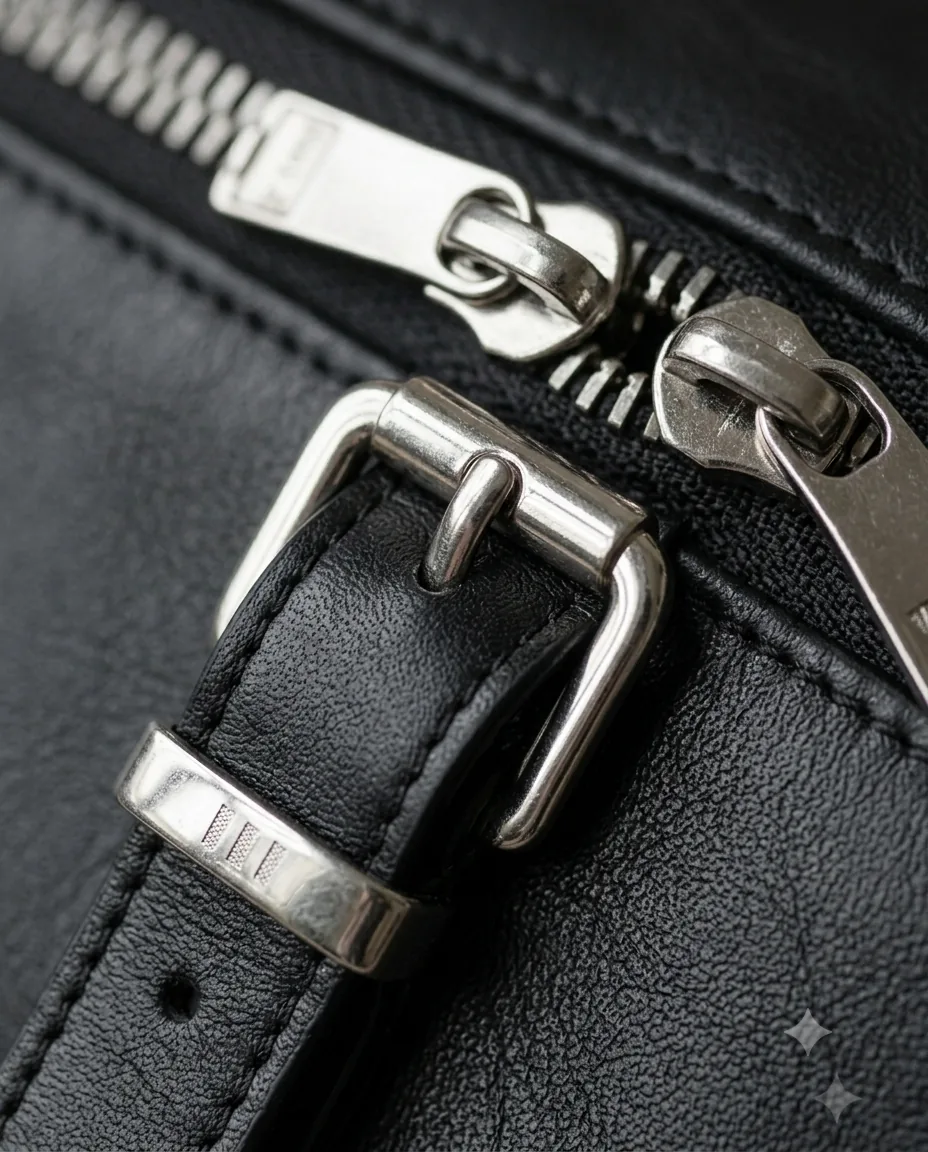
As on our bags: one only, tone on tone, discreet. A monogram sensed rather than read. No logo on the chest, no gold on the garment. Those who know, recognise it; those who do not simply see a well-dressed man.
Elegance without the shirt. Designed for Dakar.
Three colours, one rule
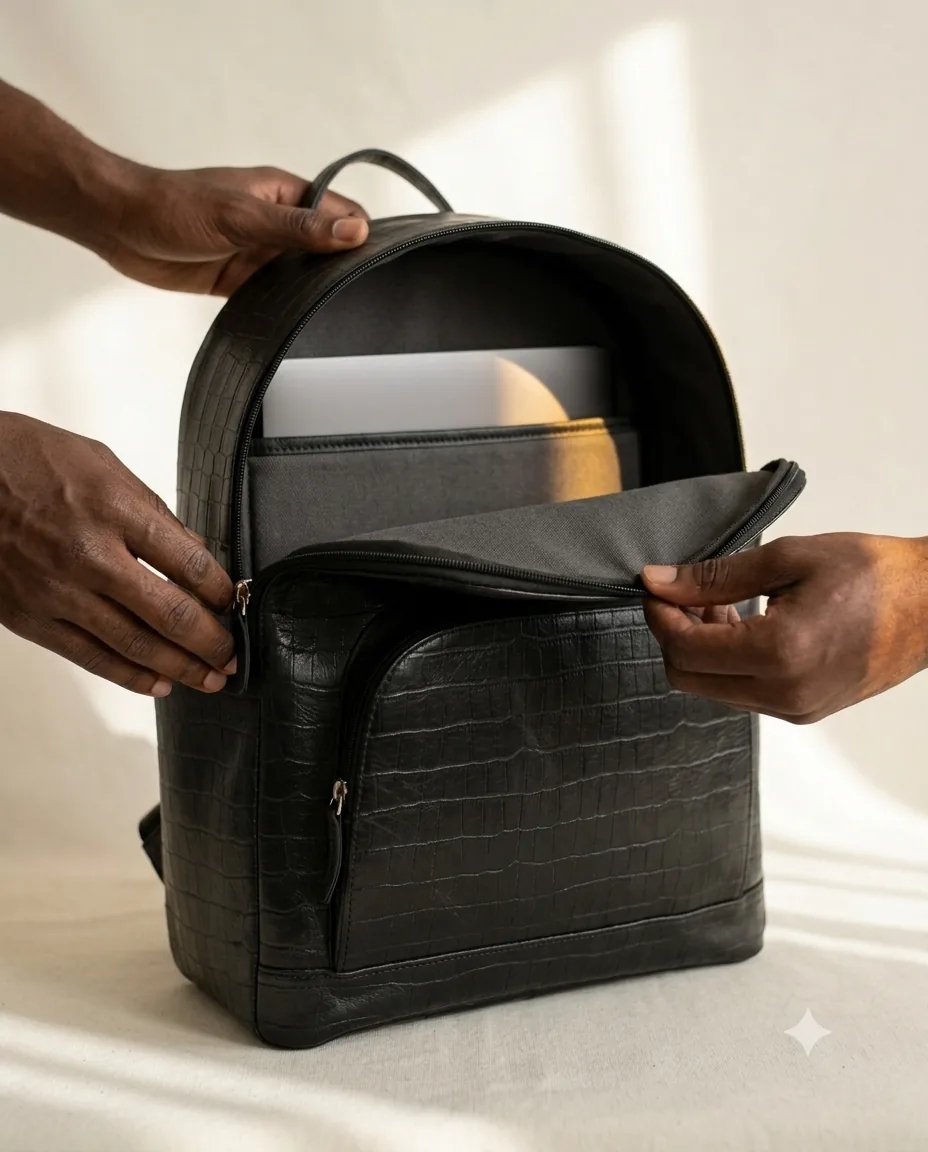
Midnight blue, ecru, deep black. Three colours that go with everything we make in leather — and that, above all, ask for nothing. The rule is the same as for our two bags: do few things, and do them infinitely well.
The Tee de Ville is in development: fabric under validation, prototypes under way. If you want to be among the first to wear it, write to us on WhatsApp.